
Strategic Workforce Planning: Anticipating Skills and HR Needs Over the Next Three Years
Learn how to anticipate future workforce needs, critical skills and three-year headcount scenarios with Strategic Workforce Planning and Anaplan.
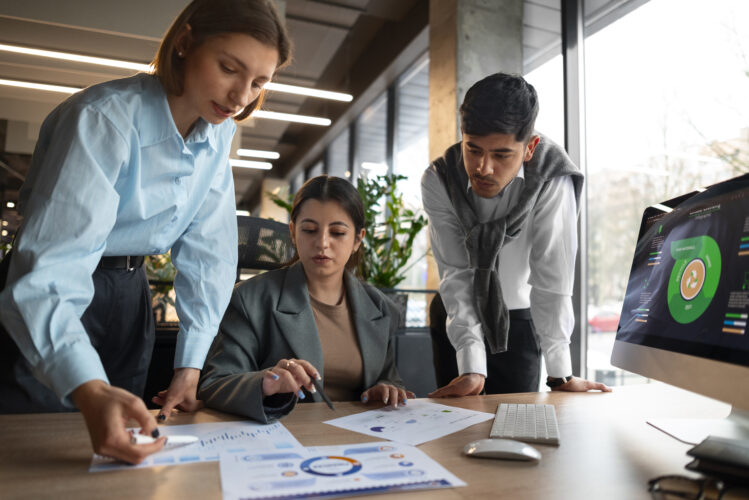
Strategic Workforce Planning is not simply about forecasting headcount. It is a connected planning approach that helps HR, operations and finance answer a key question: what workforce needs should the organisation anticipate tomorrow, and how can it start preparing today?
Many companies are able to forecast their recruitment needs over the next twelve months. Over a three-year horizon, however, the exercise becomes more complex. Future departures, internal mobility, new roles, potential reorganisations and changing skill requirements must all be taken into account.
In this context, Strategic Workforce Planning (SWP) enables organisations to move beyond a reactive approach. The objective is not to predict the future with certainty, but to develop several credible scenarios, identify gaps and make informed decisions about recruitment, internal mobility, reskilling, continuous learning and organisational development.
A scenario-based approach to workforce planning
Planning three years ahead does not mean predicting the future. It means building structured assumptions based on real workforce situations.

« SWP scenarios should not be limited to changes in skills,” explains Ha Ngan DO, Solution Architect at Beyond Plans.“They should also include retirements, internal mobility, new roles, reorganisations and changes in payroll costs.”»
As part of a Strategic Workforce Planning approach, a company can model scenarios such as:
- retirements;
- internal mobility and the creation of new positions;
- a reorganisation;
- the acquisition of a new entity;
- changes in salary inflation;
- the transformation of certain roles and the associated reskilling needs.
These scenarios help measure the gaps between available resources and future needs, while anticipating their impact on costs, skills and the organisation.
McKinsey notes that Strategic Workforce Planning is particularly valuable over a three-to-five-year horizon. It helps organisations identify capacity and skills gaps, as well as upskilling opportunities, before systematically turning to external recruitment.
This is where connected planning delivers real value. Beyond Plans’ ebook for professional services firms highlights the need to synchronise HR, financial and operational data: fewer silos, stronger cross-functional collaboration and a single source of truth.
In an Anaplan project, this approach translates into an integrated model connecting future needs, available resources, recruitment, internal mobility and business assumptions. The platform does not make decisions on behalf of HR teams: it makes the trade-offs visible.
Why AI is reshaping workforce skills
Strategic Workforce Planning was long associated with a single question: how many people should be recruited, for which roles and in which countries?
Although this approach remains useful, it is no longer sufficient. AI does not only change the number of employees an organisation needs; it also transforms the nature of work itself. Some tasks are automated, others are augmented, and new roles emerge.
As a result, certain skills are becoming increasingly important:
- understanding AI models;
- reviewing and validating outputs;
- data governance;
- critical thinking;
- change management.
According to Mercer, 91% of companies are already seeing AI transform their organisation. The World Economic Forum also expects demand for skills related to AI, big data and cybersecurity to increase significantly by 2030, while emphasising that human skills such as creative thinking, resilience and agility will remain essential.
The question is therefore no longer: “How many people will AI replace?” Instead, organisations need to ask: which roles will change, which skills will become more valuable, and how can teams be prepared to work with these tools?
Reskilling as a forward-looking lever rather than an emergency response
Many companies launch training programmes only once a skills shortage has already been identified. This approach may be sufficient for occasional needs, but it becomes unsuitable when roles are undergoing significant transformation.
Reskilling should therefore be incorporated earlier into the planning process. If a company knows that some of its roles will be transformed by AI, it needs to address several straightforward questions:
- Which employees could transition into new roles?
- What training do they still require?
- How long will it take for them to become fully operational?
- Which roles could become vulnerable if no action is taken?
Continuous learning then becomes a management tool connected to business scenarios and critical skills, rather than simply a catalogue of training courses.
This requires a dynamic skills framework with the right level of detail: not so theoretical that it becomes impossible to maintain, and not so limited that it cannot be used effectively.
Finding this balance is part of the role of a partner such as Beyond Plans: sufficiently detailed to support decisions, yet simple enough to remain sustainable over time.
Anaplan and AI: Towards AI-enhanced planning
Anaplan is particularly relevant when several functions need to work together, including HR, finance, operations, senior management and operational managers.
Within a Strategic Workforce Planning model, the platform helps organisations:
- centralise data on headcount, roles and assignments;
- incorporate assumptions relating to departures, recruitment and mobility;
- simulate different organisational development scenarios;
- compare available resources with future needs;
- model the impact of reskilling or continuous learning programmes;
- make informed decisions between external recruitment, internal mobility and skills development.
With Anaplan’s latest advances in artificial intelligence, this approach goes even further. The platform is no longer used solely to consolidate data or simulate scenarios. AI can also accelerate analysis, identify trends, facilitate modelling and support decision-making.
The objective is therefore not to choose between Anaplan and AI. On the contrary, AI enhances connected planning, provided that the model remains grounded in sound business assumptions.
A poorly defined model, even when enhanced by AI, may simply automate weak assumptions. Conversely, a well-designed Anaplan model becomes a framework for cross-functional dialogue. It enables HR teams to address skills requirements collaboratively, helps operations articulate future needs more clearly, and allows finance to understand the impact of different scenarios without reducing the discussion to cost alone.
Gartner also ranks AI and the redesign of work among HR leaders’ main priorities for 2026. Organisations need to develop an AI strategy tailored to HR and rethink their processes, talent and operating models.
Five steps to anticipate future workforce needs
Anticipating workforce needs over a three-year horizon requires a structured methodology. Strategic Workforce Planning should not become a theoretical exercise or a simple forecasting spreadsheet. It should help HR, finance and business teams make better decisions based on a shared understanding of future needs.
The first step is to clarify the organisation’s strategic direction. A growth strategy, new offering, acquisition or reorganisation must be translated into specific workforce requirements. Connecting workforce planning to business strategy helps identify which roles need to be strengthened, which skills should be developed and which positions should be created.
The next step is to map the resources currently available. This assessment should cover headcount, roles, key skills, potential mobility and foreseeable departures. It must be detailed enough to guide decision-making, while remaining simple enough to be updated regularly.
The third step is to build scenarios. These may include retirements, new positions, internal mobility, salary inflation, reorganisations and the transformation of roles through AI. The objective is not to select a single path, but to compare several credible assumptions.
Once these scenarios have been established, the company must define the corresponding action plans. Recruitment, training, reskilling, mobility and role redesign should each address an identified gap between available resources and future needs. This transition from diagnosis to decision is where SWP delivers its full value.
Finally, the model must be monitored and adjusted over time. Effective Strategic Workforce Planning is not a fixed annual exercise. It is a dynamic process informed by data, operational feedback and changing business priorities. Without regular updates, the model will quickly lose its operational value.
Key consideration: Keeping strategic management at the centre
AI capabilities embedded in planning platforms open up new possibilities. They can accelerate analysis, detect trends and simplify certain modelling activities. However, they do not replace the fundamental decisions involved in Strategic Workforce Planning.
Before relying on AI, the organisation must clarify several strategic questions:
- Which roles do we want to strengthen?
- Which skills should we develop internally?
- Which roles need to evolve alongside AI?
- What decisions should we make regarding training, mobility and organisational design?
Strategic Workforce Planning must therefore remain a leadership-led approach, rather than simply an HR or technology project. AI enriches the model, but it cannot define the organisation’s future direction on its own.
In this context, Anaplan’s strength does not lie in producing automatic forecasts. It provides a structured framework for testing assumptions, comparing scenarios and making decisions earlier.
Beyond Plans brings the scoping expertise, project experience and understanding of business use cases required to turn this framework into a solution that teams genuinely use.
FAQ: Strategic Workforce Planning, AI and skills
What is Strategic Workforce Planning?
Strategic Workforce Planning is an approach used to anticipate future workforce, skills and organisational needs. It helps align human resources with the company’s strategy over a three-to-five-year horizon.
Which scenarios can be included in an SWP model?
An SWP model may include retirements, internal mobility, new roles, reorganisations, salary inflation, the launch of a new department or the acquisition of another entity.
Why integrate AI into Strategic Workforce Planning?
AI is transforming tasks and job roles. It must therefore be considered as a driver of change in skills and organisational structures. It complements traditional workforce scenarios without replacing them.
How are Strategic Workforce Planning and reskilling connected?
Reskilling enables employees to develop new skills and transition into different roles. Within an SWP approach, it becomes a forward-looking lever rather than an emergency response.
Why use Anaplan to plan workforce and skills requirements?
Anaplan connects HR, financial and operational data. The platform enables organisations to simulate multiple scenarios, visualise gaps and monitor action plans over time.
What is Beyond Plans’ role in this type of project?
Beyond Plans supports companies in scoping, designing and implementing Anaplan models tailored to their HR, financial and operational challenges.